On Ireland.
Or a half travel, half golf, half-baked blog

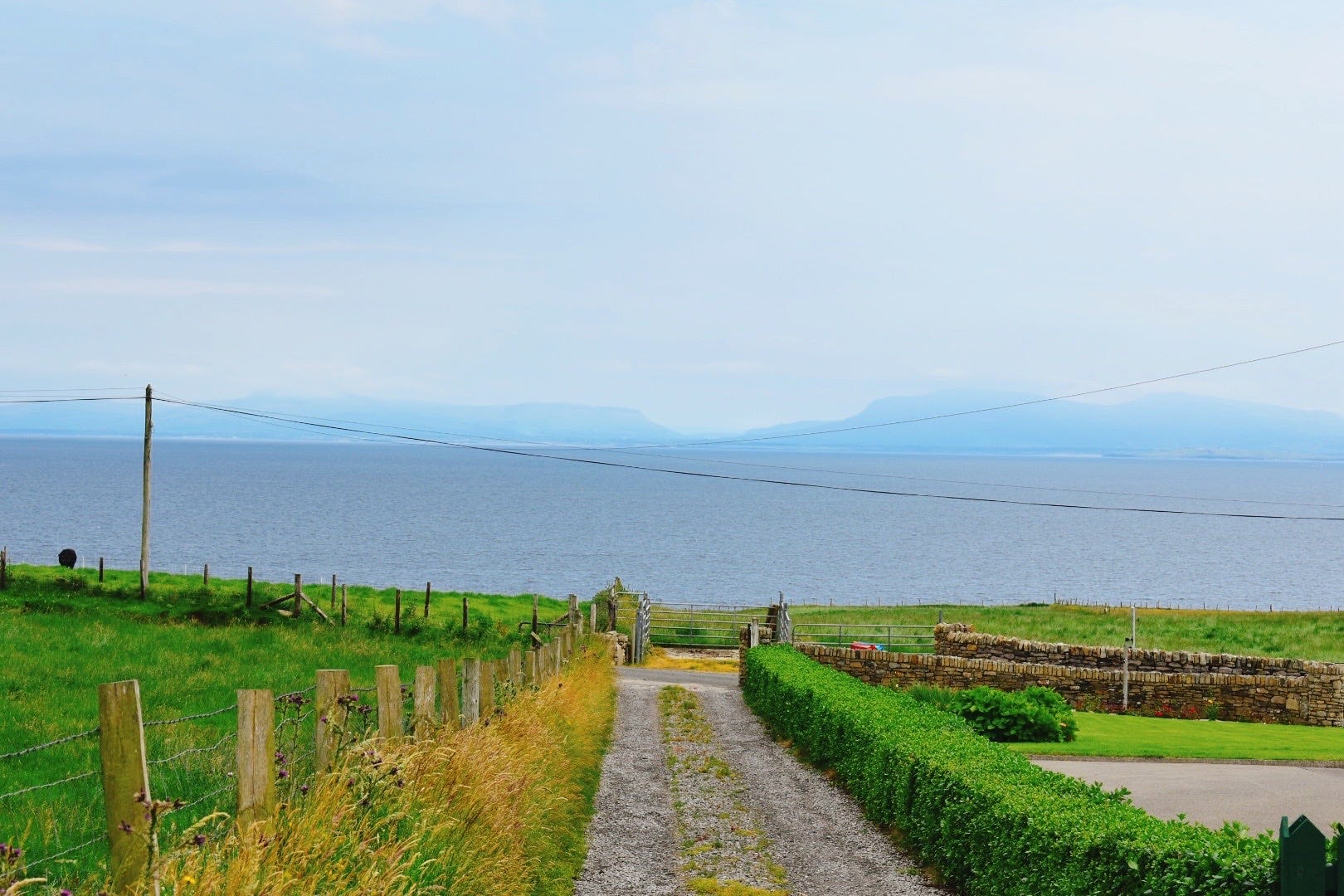
Americans love few things as much as visiting a place and speaking about it as though no one really lives there, that there are just puppets in their play flittering around the edges of their scene.
It’s a tried-and-true practice of travel writing to smush the people and the place and the experience and the excitement of being far away from home all into two-dimensional side characters into the real hero of the story, naturally, the author.
Ireland is a place that lends itself to such a flattening exercise. It is a comically beautiful place. Its verdant greens, its sheer rock faces, its lapping ocean swells and gurgling rivers and brooks that pierce through towns whose charms bleed from their roofs onto their half-open windows.
Everything fits together here. When you are in its towns and cities, the world feels small enough to hold in your fingers. Sitting in a café over a morning coffee, you’ll invariably here one local check in on a large handful of passersby asking the kinds of knowing niceties that go a step further than the box-checking we do stateside. It all feels solvable, should you have the time to get inside its nooks and its crannies.
When sitting on its seaside, the world feels crushingly large. Here, in a bed and breakfast nestled beneath overhanging cliffs outside of Killybeggs, I am distinctly aware of how finite I am and how infinite the space around me is. The shadows of hills across the ocean, the looming rain clouds rolling in, all of it feels bigger than anything that can be imitated, try as the skyscrapers of metal and glass I know might.
If I’m allowed the writer’s leeway of a little shameless homogenization, it must also be said that the people here are beautiful. Everything sounds better in an Irish accent, too, and its colors paint what roguishness there may be with a charming patina (the young caddie I had telling a story about how he was first in a nightclub at age 12 felt like a bit of lovable scampishness, where I can imagine the same story being told through a Chicago-soft-a-accent being extremely alarming).
We are staying in a bed and breakfast where my grandmother, before her downcycle and death from dementia, and her partner visited. We were greeted first by the owner’s daughter, who without a moment’s hesitation peeled off a story about my grandmother buying her ice cream and baubles in the trips they would take around the neighborhood. The owner too dropped in to check on my mother, to check on everyone’s health, and to again relay stories about my grandmother, who stayed here only twice (or three times, we’re all not sure).
It is certainly possible that stories like these just paint a picture of an especially lovable pair, and certainly anyone can have a similar experience anywhere in the world. But everyone who has gone to Ireland has the same story, or several stories, and at a certain point the sample size is big enough that you can say, yes, it is just different and it is just better here. And maybe, if you stayed here long enough, you would become better, too.
It certainly was better to my grandmother, who despite being as English as they come, felt as though she was probably from Ireland, really, and someone somewhere must have made a mistake and misfiled a form. Sitting looking through the same windows she would sit at and watch the sun go down, it isn’t hard to see why one would like to think so. And, certainly, it is not lost on me how fitting it is that an English person would visit Ireland, love it, and declare it to be their birthright.
This trip to Ireland is in remembrance of her. But hammering out this blog in the late hours of the night in “her place” is the first time it really felt that way. Soil seems to have that effect on people, I suppose.
But this trip was also a golf expedition. Not a pilgrimage in the way trips to Scotland are, but a chance to see the game in its more wild, aboriginal state.
Looking out from the oceanside holes at Ballybunion, Strandhill, Lahinch, and County Sligo, I was taken by how the other seafront land looked. From vantage points from peninsula greens and exposed fairways, you can see farms that reached up to a cliff. Or fields that followed the curve of a hill down towards a rocky beach.
The windswept, jagged dunes that make links golf so great must be useless for anything else beyond perhaps a goat pasture. Partly because of that, there is no wincing about what could be there if not a golf course. It’s impossible to imagine anything else other than a rolling valley to whack a ball through.
The great courses of Ireland are not meticulously well-kept in the way they are in the United States. They are scruffy, and the don’t always make sense, and they are often unserious. People tend to go overboard with their belief that golf is especially democratic in the UK and Ireland, which says far more about the comparative failings of US golf than anything else. My $500 greens fee at Ballybunion, for example, did not feel like it was a revelation of open access.
But I am here, and not locked out, and there are locals on the course, one threesome of which I saw on the 2nd hole of Lahinch at 915 PM, and they do not have 8 famous golf course logos on their bag, and they are not regaling me of stories about unapproachable private clubs, and they are pushing their own bag on a trolley, and you can imagine yourself having a weekly game on courses that are among the very best in the world.
The golf is of the land, which is of the sea, and all of it is of the people.
In the states, that is almost never true. The golf that is the most of the land is almost never of the people, but is either locked behind the gates of a country club or behind the doors of an obscenely expensive resort. When the golf is of the people, it is almost never of the land, it is slapped atop of it. And if by some miracle it is, it is never also of the sea. The few courses that are of the land, and of the sea, and of the people are the courses that serve the richest and most elite of New York’s upper crust, and the only problem there is that the people are the most individualist dystopics of American exceptionalism that calling Bayonne Golf Club “of the people” is an insult, not a commendation.
I do not know when I will be back to Ireland, or in truth if I ever will return. But it is a place that gets inside of you, however annoyingly cliché that may be. It’s stuck to my ribs. And I am replaying the dedication WB Yeats wrote for Thor Ballylee in my head over and over again.
I, the poet William Yeats,
With old mill boards and sea-green slates,
And smithy work from the Gort forge,
Restored this tower for my wife George;
And may these characters remain
When all is ruin once again.